How St John Ambulance Empowers Young Australians to Keep Each Other Safe
For many young Australians, socialising is an important part of growing up. Parties, school celebrations and festivals offer opportunities for fostering connection, belonging, and independence. Yet, these same environments can also present a variety of risks when mixed with drugs and alcohol.
While some approaches focus on prevention and abstinence, far less attention is given to the reality that young people may find themselves supporting a friend who is unwell, injured, or in serious distress - as a result of drugs and alcohol - with no idea what to do.
Party Ready, a drug- and alcohol-contextualised first aid education program from St John Ambulance Victoria, was developed to address this issue and potential gap in learning. Designed specifically for Australian youth and backed by national data such at the National Drug Strategy Household Survey 2022-23, the program equips young people with the practical skills, confidence, and knowledge to respond safely and effectively to physical and mental health emergencies involving alcohol and other drugs, without judgement or fear.
- Program Details: The importance of first aid in context
First aid is traditionally taught in clinical or workplace contexts that don’t always reflect the situations young people are most likely to encounter. In reality, many emergencies involving youth occur in party settings, where uncertainty, panic, and peer pressure can interfere with - or even prevent- appropriate interventions.
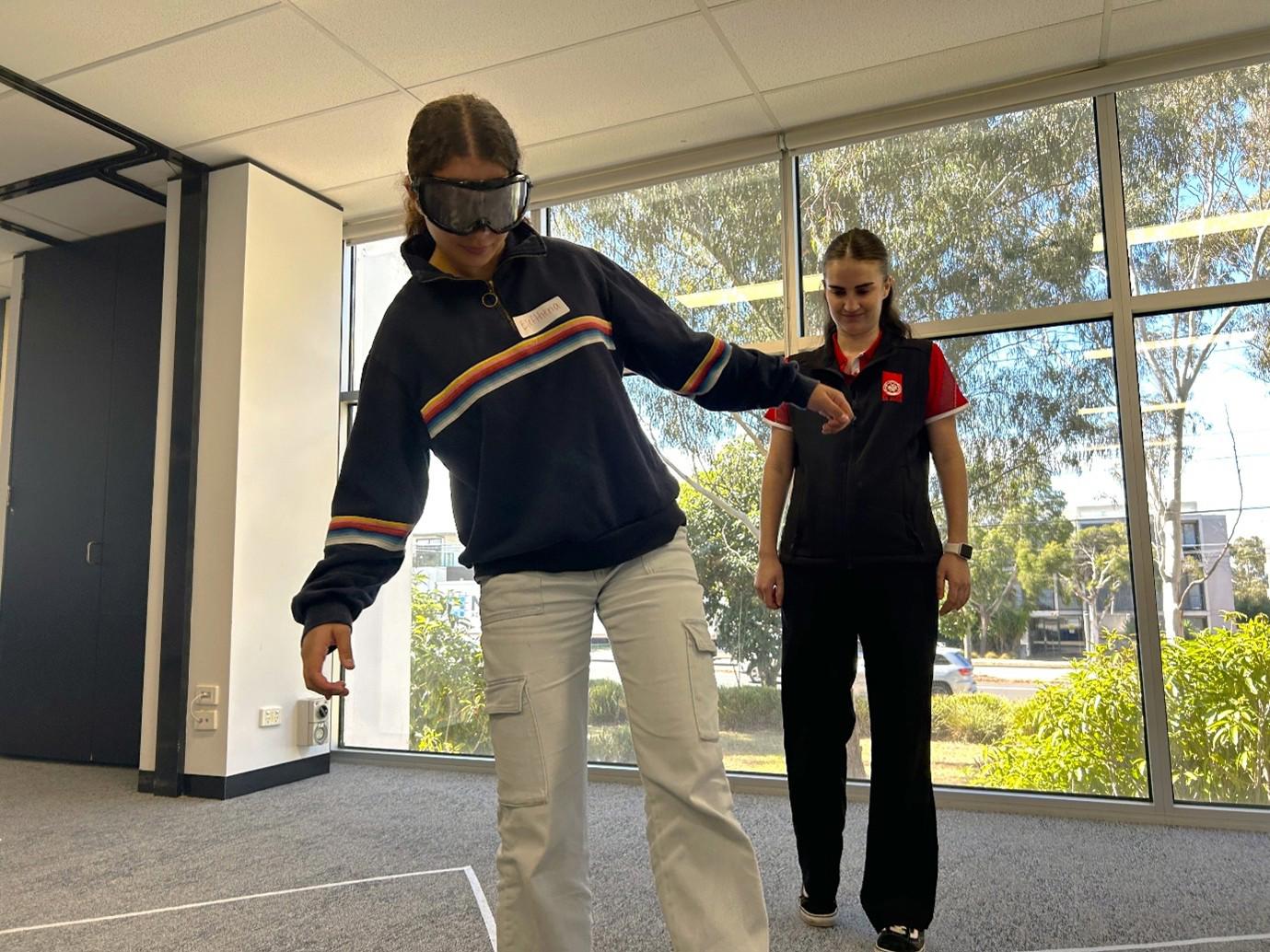
Party Ready meets students where they are, acknowledging that most are new to first aid and may not know what to expect. Rather than assuming prior knowledge, the program provides clear explanations and practical context, giving students the reasoning behind each step without overwhelming them with detail. By embedding first aid education within realistic, age-appropriate scenarios, Party Ready also recognises that substance use exists in youth social environments and emphasises harm minimisation. This approach encourages curiosity, normalises uncertainty, and creates a safe space for learners to try, make mistakes, and build confidence at their own pace.
Some of the core program components include:
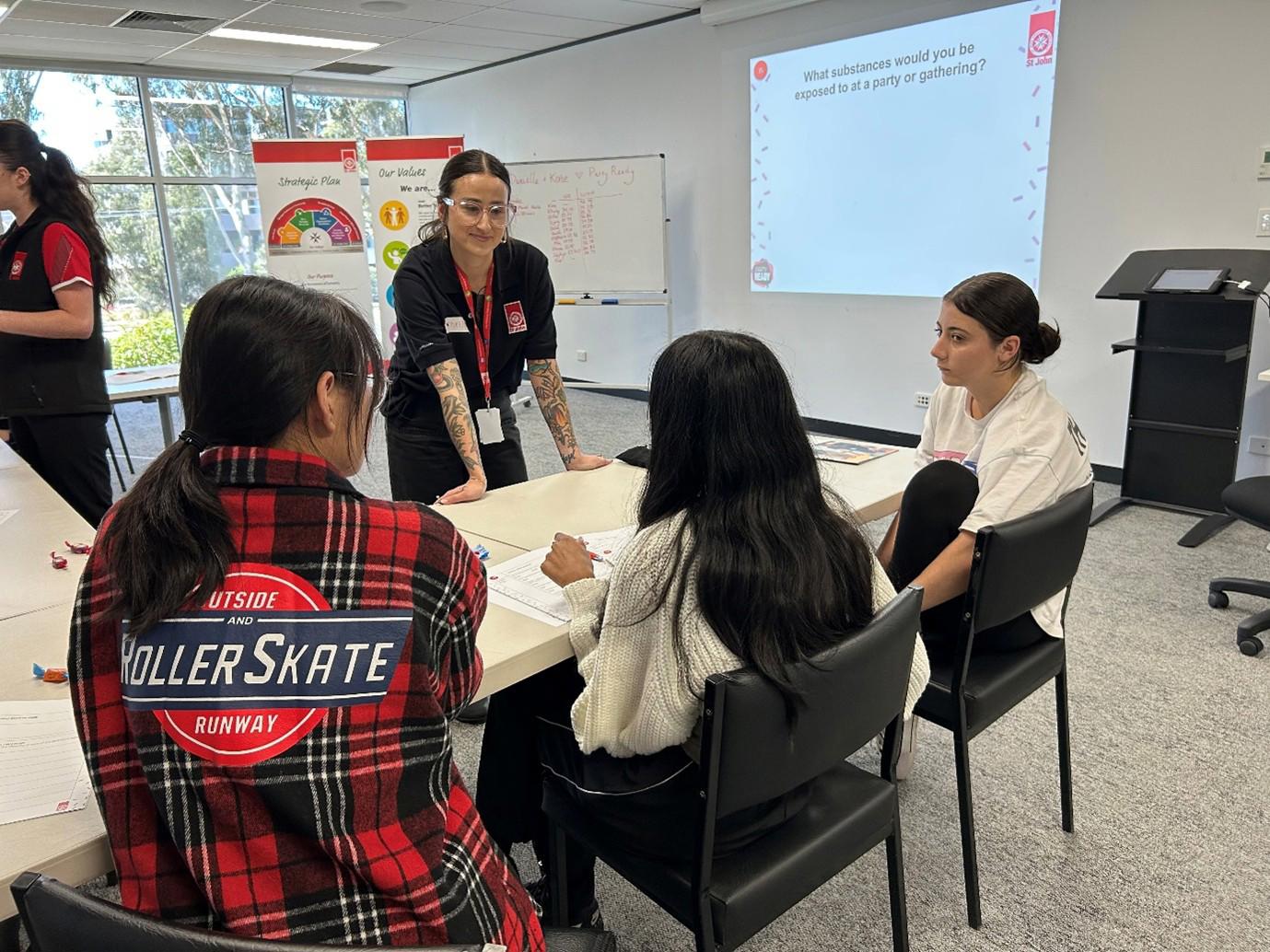
- Alcohol, drug, and mental health trends for young people
- Recognising overdose signs and symptoms
- Harm minimisation tools such as Naloxone nasal spray administration
- Injury assessment and treatment including recovery position, CPR, and bandaging
- De-escalation of mental health emergencies
One of the biggest barriers to effective first aid response among young people is hesitation. Fear of “getting someone in trouble,” uncertainty about the severity of the situation, or simply not knowing what to do can all lead to dangerous delays in life-saving action. Party Ready addresses this hesitation, using the familiar first aid action plan as a framework - not as a checklist, but as a tool to build clarity, confidence, and decision-making. The program walks students through each step in a way that is accessible, supportive, and grounded in real-world scenarios:
- Danger – Students learn about risks faced by the casualty and also bystanders and first aiders. Many are surprised to discover that recognising personal limits and stepping back when a situation escalates is responsible and appropriate. This empowers students to seek help early, rather than feeling pressured to manage situations beyond their scope.
- Response – Students are introduced to practical strategies for gaining a response and apply these skills through hands-on action by placing a casualty in the recovery position. Practising repeatedly in a safe environment reinforces confidence and normalises physical intervention when required.
- Send for Help – Fear of calling emergency services is a major barrier for young people, and Party Ready demystifies the process of contacting 000. Students learn what a typical call involves, what information is helpful to provide, and why honesty is critical. The program normalises the stress of making an emergency call, reinforcing that emergency services exist to provide support, not judgement.
- Airway and Breathing –. Students learn to recognise and respond to potential airway obstructions and assess the quality of breathing through factors such as sound, rhythm, and timing.
- CPR – Using a simplified, compression-only approach, Party Ready helps students focus on effective chest compressions while reducing cognitive overload. Practising in pairs encourages teamwork and prepares students for real-life situations where sharing responsibility can reduce fatigue and stress.
- Defibrillation – Students learn how defibrillators function, how to operate them safely, and why early use is critical to survival. By highlighting where defibrillators are commonly located and encouraging students to notice them in their environments, the program fosters awareness that extends well beyond the classroom.
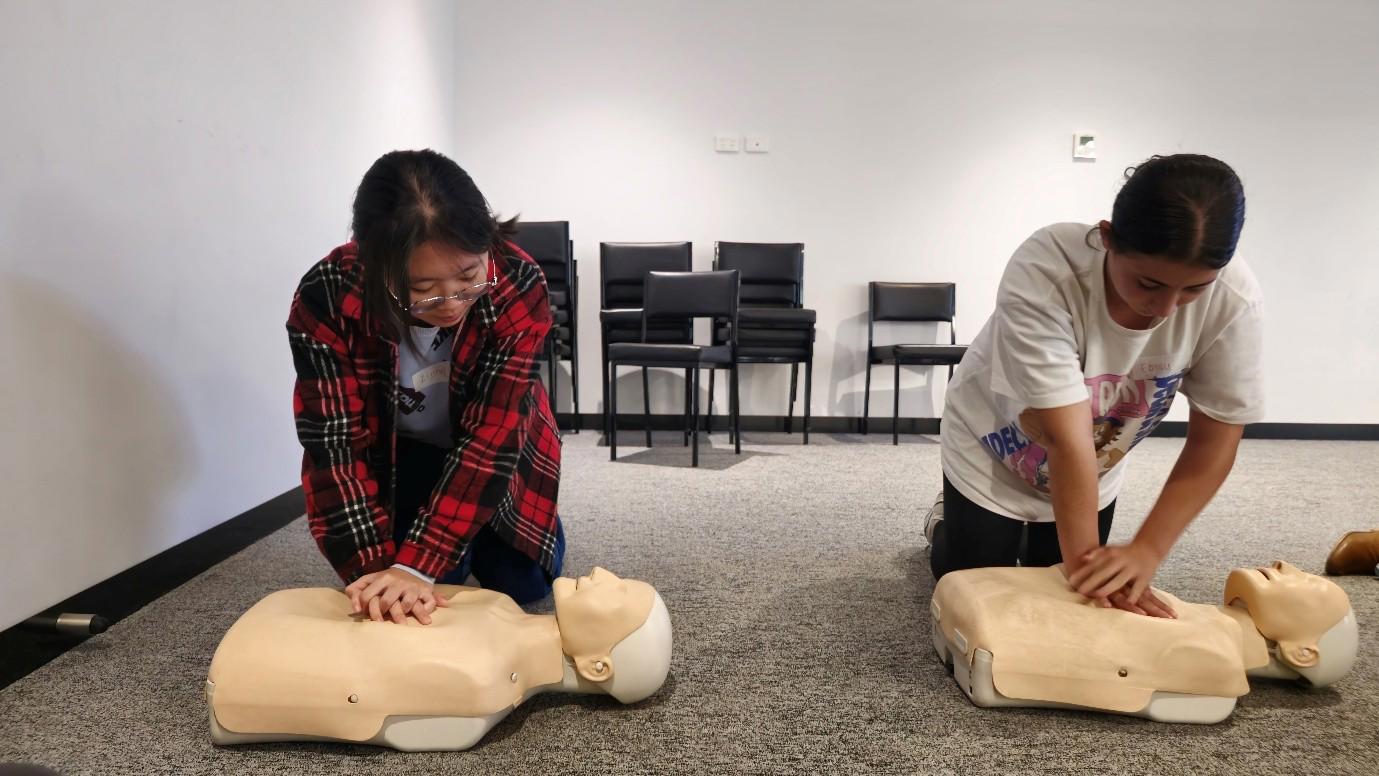
These lessons are reinforced through interactive workbooks and realistic scenario-based activities. Students reflect on what they might do in different emergencies, discuss options with peers, and practise responses in a collaborative environment. By repeatedly applying the skills they have learned, students build confidence not only in performing first aid, but also in making decisions under pressure, recognising warning signs, and taking timely action. Whether at a party, at school, or in the wider community, first aid is transformed from abstract knowledge into practical capability, empowering students to act when it matters most.
- Program Impact: How Party Ready builds confidence and capability
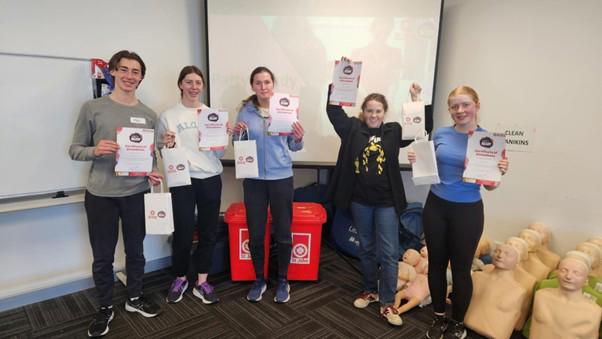
Party Ready also shifts attitudes and behaviours and empowers young Australians towards confident, timely action. By practising in realistic, supportive scenarios, students gain hands-on experience that builds both competence and self-assurance. Many participants report feeling more prepared to look after friends, more comfortable contacting emergency services, and more knowledgeable about the risks associated with alcohol and other drugs.
A key feature of Party Ready is measuring impact through pre- and post-program self-assessment surveys. In 2025, students’ self-rated confidence increased substantially over the course of the program, with confidence in responding to physical health emergencies rising by over 65%, and confidence for mental health emergencies increasing by nearly 60%. These improvements highlight the program’s effectiveness in giving young people the reassurance and skills they need to take action when it matters most.
“I liked how we got to do hands on activities like practicing compressions and how to put someone in recovery position. Overall, this experience was fun and interesting that I could save someone's life if I need to. Thanks St John!”
The program also has a transformative effect on mindset. Many students enter workshops anxious about making mistakes or unsure whether they could handle a real emergency. Party Ready normalises first-time learning, emphasising that hesitation is common, mistakes are expected, and asking for help is always appropriate. As one Braemar College student reflected:
“The activities were engaging and let us put them into work either through problem solving or physically. The content and the practicals are essential to learn, and I learnt a lot in the workshop.”
By creating this safe learning environment, students develop the confidence to act decisively in real-life situations, knowing they are supported by knowledge, practice, and a clear action framework.
The impact extends beyond individual skill development, contributing to broader community resilience. In 2025 alone, Party Ready reached approximately 1900 students, demonstrating the program’s scale and sustainability. When young people are equipped to respond effectively to emergencies, the benefits ripple through their peer groups, families, and wider communities. Early intervention can reduce the severity of harm, improve outcomes for peers experiencing medical crises, and foster a culture of care and responsibility within social networks.
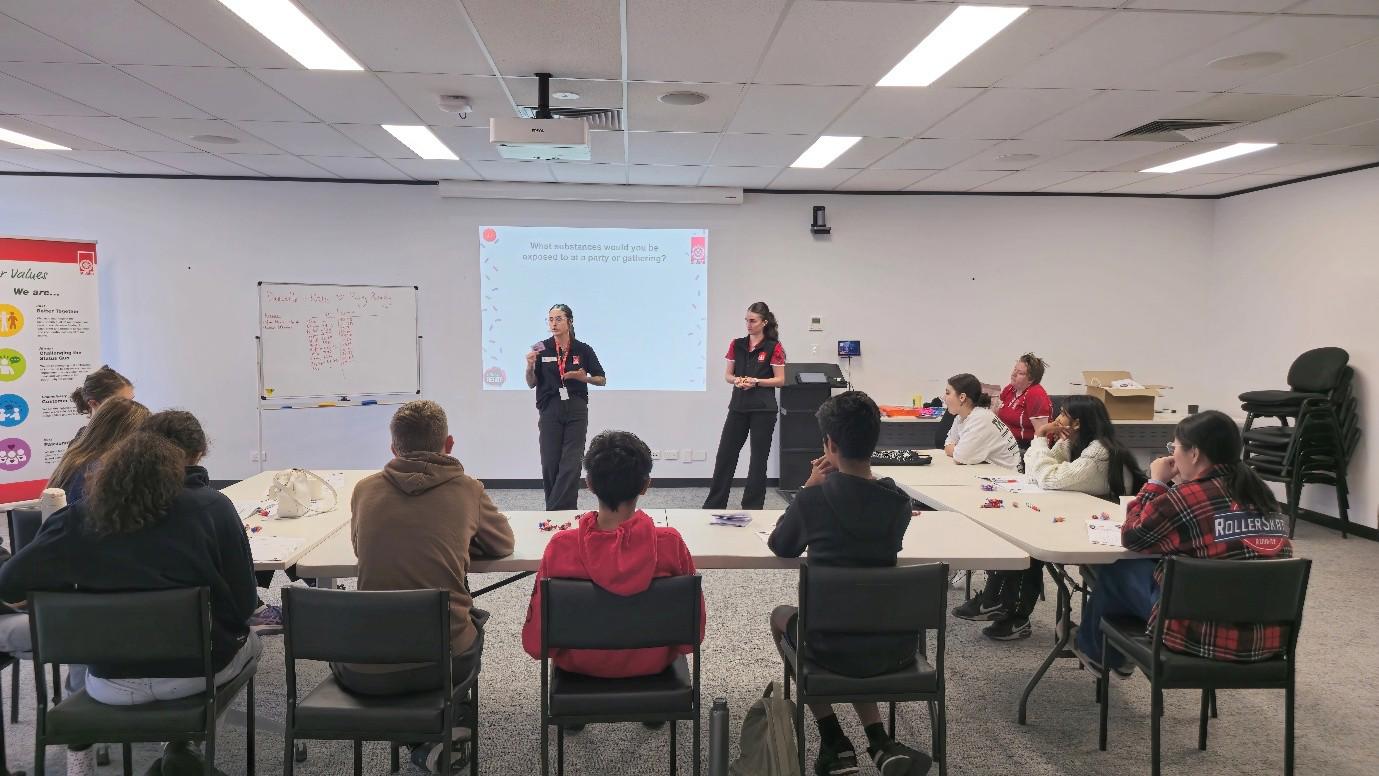
By combining evidence-informed teaching, scenario-based practice, a novice-friendly approach, and ongoing evaluation through self-assessment, Party Ready transforms first aid education from a theoretical set of skills into real-world capability, preparing young people to act safely, confidently, and effectively whenever emergencies occur.
Interested in bringing Party Ready to your school community? Learn how your students can participate here.
- Program Strength: How Party Ready supports community resilience
St John is committed to building safer, more resilient communities by equipping Australians with practical skills they can use in everyday life. While accredited first aid courses provide essential qualifications for professionals, a central pillar of St John’s mission is community education - programs that teach people of all ages, backgrounds, and experiences how to recognise emergencies, respond appropriately, and support each other safely. Community education focuses on accessible, practical learning that empowers individuals to act confidently in real-world situations.
By targeting young Australians in secondary schools, the program also fosters a culture of preparedness and care. Students leave workshops with increased confidence, practical knowledge, and the ability to make timely decisions under pressure. Collectively, these outcomes extend far beyond individual capability: communities become more resilient, emergency responses are faster and more effective, and health outcomes improve.
Across the program’s lifespan, Party Ready reached over 5,000 students, with pre- and post-program self-assessments showing significant increases in confidence to respond to both physical and mental health emergencies.
The significance of this approach has been formally recognised. In 2025, Party Ready received a Resilient Australia Award in Victoria in the Community category, acknowledging its contribution to strengthening community safety, preparedness, and resilience.
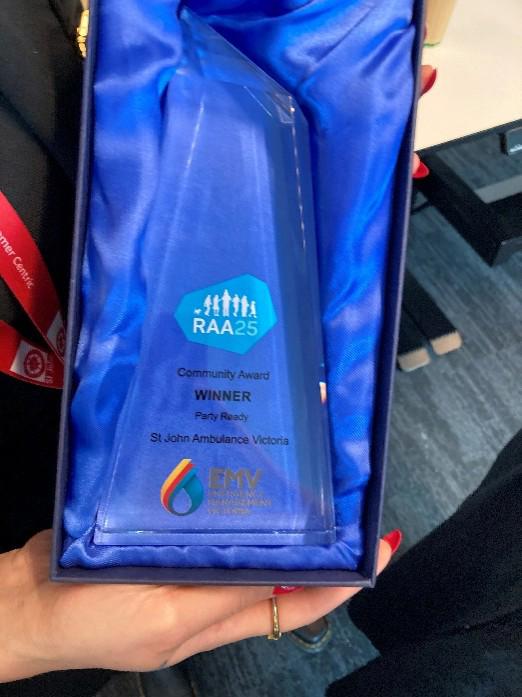
As a national finalist, the program’s model for youth-focused, preventative first aid education was highlighted as a best-practice example for other communities. In addition, the program has been awarded a grant by the Victorian Department of Education for delivery to government schools in 2026, making the program free to access this year for public secondary schools. This recognition helps St John continue to deliver reflects its broader mission: equipping Australians with practical skills, confidence, and promoting resilient communities capable of responding in emergencies.
Bring Party Ready to Your School
Party Ready is available to secondary schools across Victoria, with government schools eligible for funded delivery in 2026 through the Victorian Department of Education grant.
Enquire about booking Party Ready for your students today.
Contact our team at partyready@stjohnvic.com.au or visit Party Ready to learn more.
To book: Party Ready Booking Form
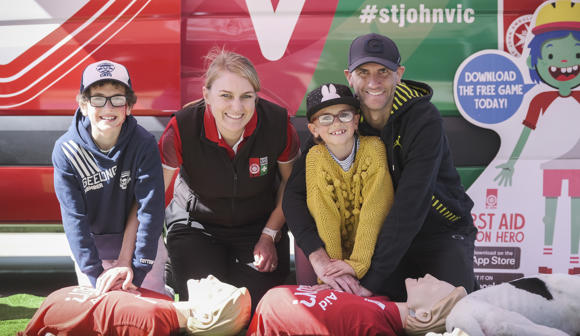
Community Programs
St John is developing a range of targeted community programs to increase the resilience of at-risk Victorian communities.
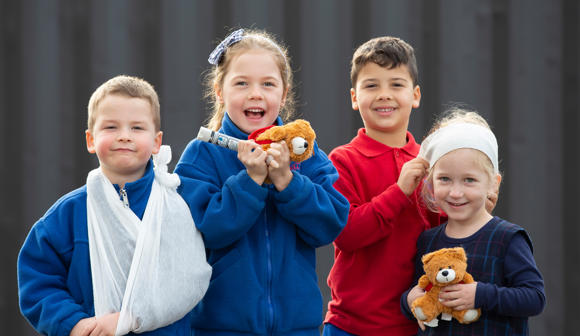
First Aid In Schools Program
This free Program teaches primary school students on the importance of First Aid and what to do in an event of an emergency.

Defib In Your Street Program
Creating the safest places in Australia to have a sudden cardiac arrest with 24/7 defibs and free training.